Contents
- Introduction
- Cutting Factory Electricity Cost: A Guide for Malaysian Manufacturers
- Understand Where Your Factory's Electricity Cost Comes From
- Solar Power for Manufacturing Facilities
- Managing Maximum Demand (MD) Charges
- Energy Efficiency Measures Beyond Solar
- Calculating the Return on Investment
- Getting Started with a Factory Energy Audit
- Frequently Asked Questions
- Start Cutting Your Factory's Electricity Cost
Have Questions About Solar for Your Property?
Talk to our team to find the right solar solution for your specific needs and budget.
Introduction
Electricity is one of the largest controllable operating costs for manufacturers in Malaysia, and with industrial tariffs continuing to climb, many factory owners are watching this line item eat further into already tight margins. The good news is that factory electricity cost is rarely fixed. With the right combination of solar power, load management, and efficiency measures, manufacturers can meaningfully reduce their exposure to rising tariffs while keeping production running smoothly.
Cutting Factory Electricity Cost: A Guide for Malaysian Manufacturers
Understand Where Your Factory's Electricity Cost Comes From
Before any cost-saving plan makes sense, it helps to understand what is actually driving your factory's electricity bill. Unlike an office or retail space, a factory's consumption is shaped by heavy machinery, motors, compressors, and process equipment that often run for extended shifts, sometimes around the clock. These loads tend to be the single biggest contributor to overall usage, and they are also the least visible on a standard TNB bill, which only shows total consumption and demand rather than a breakdown by equipment.
Beyond production machinery, factories typically run compressed air systems, industrial HVAC or ventilation for worker comfort and process control, and extensive lighting across large floor areas and warehouse zones. Compressors in particular are notorious for consuming more energy than expected, especially when there are air leaks or the system is oversized for actual demand. Motors that are left idling or that lack variable speed drives also quietly add to consumption without contributing to output.
Getting a clear picture of these consumption patterns, ideally through metering or a proper energy audit, is the starting point for any meaningful reduction strategy. Without this baseline, it is difficult to know whether solar, efficiency upgrades, or demand management will deliver the best return for your specific operation.
Solar Power for Manufacturing Facilities
Factories are often particularly well suited to solar power. Most industrial and manufacturing buildings in Malaysia have large, uninterrupted roof spans that are otherwise underused, giving ample space for a sizeable solar photovoltaic (PV) system. Combine that with the fact that manufacturing operations typically consume most of their electricity during daylight hours, when production lines and equipment are active, and you have a strong natural match between solar generation and factory demand.
This is different from residential solar, where much of a household's usage happens in the evening after the sun has set. A factory running single or double shifts during the day can consume a much larger share of the solar energy it generates in real time, reducing the amount of electricity it needs to draw from TNB during peak-rate hours. This directly lowers the energy portion of the electricity bill, and depending on system size, can also help ease demand during the day.
For manufacturers exploring this option, it is worth looking into solar for factories in Malaysia and related guidance on solar for SME and factories, as the sizing, financing, and technical considerations differ from residential or even standard commercial rooftop installations.
Managing Maximum Demand (MD) Charges
For factories on industrial TNB tariffs, Maximum Demand charges are often an overlooked but significant driver of overall electricity cost. MD is based on the highest level of power drawn during any short interval within a billing cycle, and once that peak is recorded, it can affect charges for the month regardless of how much lower average consumption was the rest of the time. Factories with equipment that starts up simultaneously, such as multiple large motors or compressors kicking in together, are especially prone to demand spikes.
Solar power alone does not directly reduce MD in most configurations, since demand charges are typically tied to the highest draw from the grid regardless of when solar is generating. This is where battery storage and load management come in. A battery system can be used to shave peak demand by discharging stored energy during high-load moments, smoothing out spikes before they register as a new maximum. Staggering the startup of heavy equipment and shifting non-critical loads to off-peak periods can achieve a similar effect without any additional hardware.
Because MD charges are billed differently from energy consumption, addressing them requires a distinct strategy from simply installing solar panels. A proper load profile analysis will show whether MD is a meaningful contributor to your factory's bill and whether a solar plus battery approach, or simpler operational scheduling changes, would be the more cost-effective fix.
Energy Efficiency Measures Beyond Solar
Solar power addresses how electricity is sourced, but reducing how much electricity is needed in the first place is just as important, and often cheaper to implement. Regular maintenance of motors, compressors, and HVAC systems keeps them running at their rated efficiency rather than drawing extra power to compensate for wear, leaks, or poor calibration. A compressed air system with unfixed leaks, for example, can waste a substantial amount of energy without anyone noticing until the bill arrives.
Power factor correction is another area many factories overlook. A poor power factor means the facility is drawing more current than necessary to do the same amount of useful work, and TNB penalises industrial accounts with low power factor through additional charges. Installing capacitor banks or upgrading equipment to correct this can reduce both wasted energy and avoidable penalties.
Simple operational changes also add up. Scheduling energy-intensive processes during off-peak periods where tariffs are lower, retrofitting factory floors and warehouse areas with LED lighting, and installing variable speed drives on motors that do not need to run at full speed constantly are all measures that reduce consumption without requiring a large capital outlay. These steps work well alongside solar rather than instead of it.
Want to know how much you can save?
Send us your TNB bill and we will work out the system size and cost. Free, no commitment.
Calculating the Return on Investment
Every factory has a different load profile, shift pattern, and mix of equipment, which means there is no single number that applies to how quickly a solar or efficiency investment pays back. A facility running three shifts with steady daytime and nighttime consumption will see a different return than one running a single day shift with sharp demand peaks. Guessing at payback based on a neighbouring factory's experience or a rule of thumb figure can lead to over- or under-sizing a system.
A proper return on investment calculation starts with actual consumption data, ideally at least twelve months of TNB bills along with, where possible, interval or sub-metered data showing how load varies through the day. This allows a realistic estimate of how much solar generation can be self-consumed versus exported, how MD charges might be affected, and how efficiency measures interact with the solar system's output.
Manufacturers considering commercial solar solutions should treat the ROI calculation as a core part of the planning process rather than an afterthought. A well-modelled analysis gives a defensible business case to present to management or financiers, and it also helps set realistic expectations for when savings will materially show up on the electricity bill.
Getting Started with a Factory Energy Audit
The most reliable way to cut factory electricity cost is to start with a proper energy audit rather than jumping straight to a solar quote. An audit typically involves reviewing historical TNB bills, examining the facility's MD and power factor history, and where useful, installing temporary metering on major equipment to understand exactly how and when electricity is being used across the site.
From there, an experienced assessor can map out which measures will have the greatest impact for your specific operation, whether that is a rooftop solar system, a battery for demand management, targeted efficiency upgrades, or some combination of all three. This is particularly relevant for facilities such as warehouses and logistics hubs, where consumption patterns can differ from a typical production floor, so it is worth looking at solar for warehouses and logistics as a related consideration if your operation includes storage or distribution space.
Starting with an audit also protects against oversizing or undersizing a system, which is one of the more common and costly mistakes in industrial solar and efficiency projects. A clear, data-backed starting point makes every subsequent decision, from system size to financing structure, considerably easier to get right.
Frequently Asked Questions
Q: How much can solar realistically reduce a factory's electricity bill?
A: It depends on roof space, system size, and how much of the factory's consumption happens during daylight hours, which is why a site-specific assessment is needed rather than a general estimate.
Q: Does installing solar panels reduce Maximum Demand charges?
A: Not directly in most cases, since MD is based on peak draw from the grid. Reducing MD usually requires battery storage or load scheduling alongside solar.
Q: Is solar worth it for a factory that operates night shifts?
A: Solar still offsets daytime consumption, but factories with significant night-time load may see a smaller proportion of their total usage covered, so battery storage becomes more relevant.
Q: What is the first step before investing in solar or efficiency upgrades?
A: A proper energy audit or load profile analysis, so that any investment is based on actual consumption data rather than assumptions.
Q: Can energy efficiency measures make a bigger difference than solar?
A: For some factories, addressing power factor, equipment maintenance, and scheduling can deliver meaningful savings on their own, and these measures also improve how effective a future solar investment will be.
Start Cutting Your Factory's Electricity Cost
Every factory's electricity cost is shaped by its own equipment, shift patterns, and load profile, which means the right combination of solar, battery storage, and efficiency measures will look different for every operation. Working with a team that understands industrial TNB tariffs and manufacturing loads makes it far easier to plan an approach that actually fits your facility.
- ✅ Clear picture of where your electricity cost is coming from
- ✅ Guidance tailored to your factory's shift pattern and load profile
- ✅ Realistic payback expectations based on real data
- ✅ Support with Maximum Demand and power factor considerations
Professional services
Our expertise
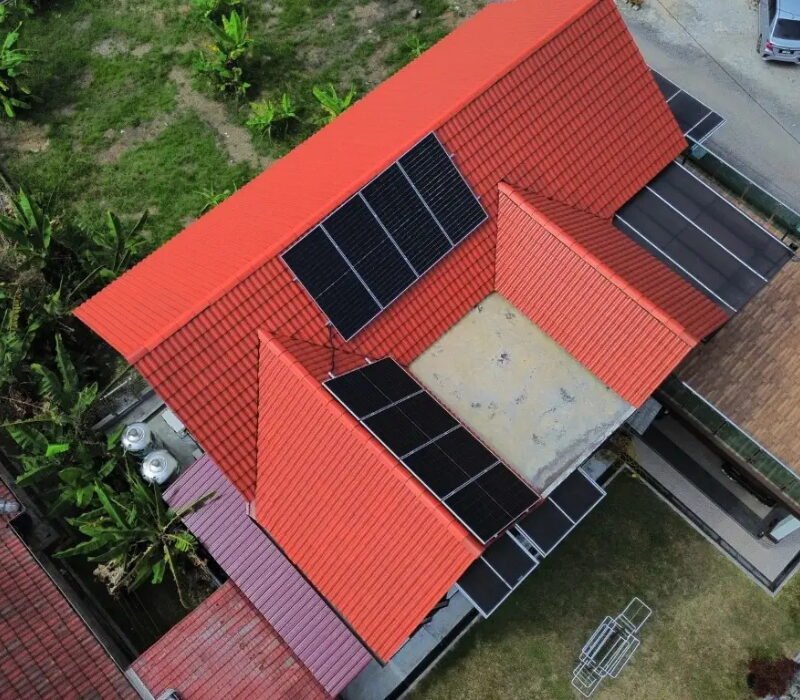
Instead of paying recurring electricity charges, invest in a system that generates its own power and reduces your long-term household expenses.

Solar panels are built to last. With minimal maintenance and strong performance warranties, a solar system continues generating savings year after year.





Ready to start?
Talk to the Arus EnerG team first. We can survey your roof and give you real numbers before you decide.
Related posts
- Feed-in Tariff Malaysia: Is FiT Still Available in 2026?
Quick answer: The Feed-in Tariff (FiT) in Malaysia has been closed to new registrations since 2021 for rooftop...
13 August 20260LikeBy Arus EnerG - Pemasangan Panel Solar Petaling Jaya: Panduan Kos & Penjimatan (2026)
Panduan ini menerangkan pemasangan panel solar Petaling Jaya untuk pemilik rumah dan perniagaan di Malaysia, berdasarkan terma dan...
14 August 20260LikeBy Arus EnerG - Apa Maksud Tier 1 Solar Panel?
Ada Soalan Tentang Solar untuk Anda? Berbincang dengan pakar kami untuk dapatkan cadangan sistem solar yang sesuai dengan...