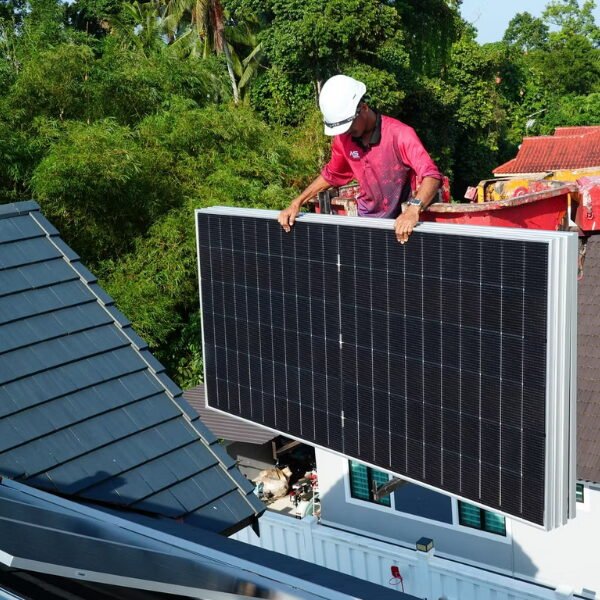
A Solar Panel for Home Malaysia system helps homeowners reduce electricity bills while enjoying reliable long-term energy savings. In addition, it provides clean energy for everyday use.
Designed specifically for residential properties, our home solar systems work with your existing TNB connection. As a result, you can continue using electricity without changing your daily routine.
Whether you own a terrace house, semi-detached home, bungalow, or condominium, Arus EnerG helps you choose the right solar panel system for your home.

What's Included in Your Solar Panel for Home Malaysia System
Premium-grade solar panels designed to convert sunlight into clean electricity with high efficiency and strong performance even in hot Malaysian weather. Built with durable tempered glass and corrosion-resistant frames to withstand heavy rain and harsh conditions.
The inverter is the “heart” of your solar system. It converts DC electricity generated by the panels into usable AC electricity for your home.
Grid-tied inverter allows seamless connection to the utility grid.
Hybrid inverter supports battery integration for future energy storage upgrades.
Engineered aluminum mounting structures securely anchor the panels to your roof. Designed to handle wind loads, prevent water leakage, and ensure long-term structural stability without damaging your roof.
Complete safety protection including DC isolators, AC isolators, surge protection devices (SPD), and proper earthing systems. These components safeguard your home and solar system from electrical faults, lightning surges, and overload risks.
Real-time monitoring via mobile app or web portal lets you track:
Daily energy generation
Monthly savings
System performance status
Alerts for maintenance or irregularities
Technology Partners
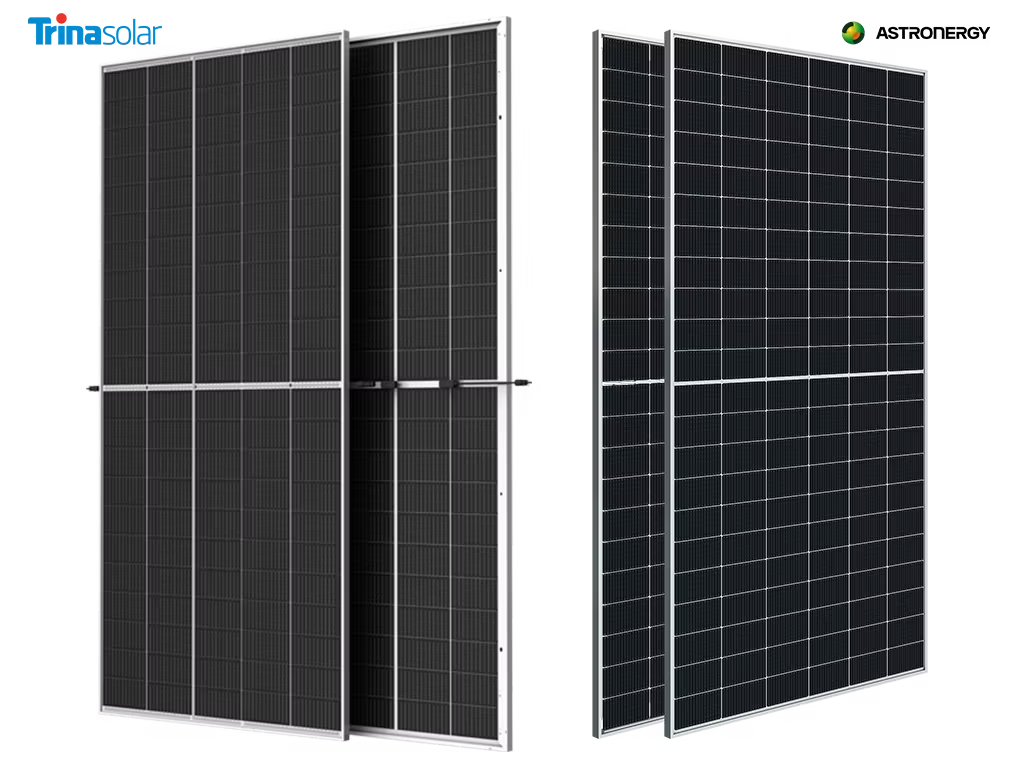
At Arus EnerG, we use premium Tier 1 solar panels. Furthermore, we only select trusted Tier 1 brands that are known for quality, safety, and long-term performance.
One of the world’s leading solar technology companies, Trina Solar is known for its cutting-edge R&D, high-efficiency modules, and large-scale global installations. Their panels consistently rank among top performers in international reliability and performance tests.
For this reason, Trina Solar is one of our preferred choices for residential solar projects.
A trusted global PV brand under the CHINT Group, Astronergy specialises in high-efficiency n-type and PERC solar modules. Their products are engineered for durability and long-term energy yield, especially in challenging climates.

Why We Choose Tier 1 Brands
Moreover, premium solar panels provide better efficiency and reliable performance over many years.
- High energy conversion efficiency
- Strong resistance to tropical heat and humidity
- Long-term product and performance warranties
- Proven global performance track record
Performance & Lifespan
Solar panels typically last 25–30 years. In fact, many systems continue performing efficiently beyond this period with proper maintenance.
Performance degradation is minimal over time. As a result, homeowners continue enjoying reliable energy production for many years.
Inverters usually last 8–12 years depending on model
With proper installation and system design, your solar investment continues delivering value for decades.

Help customers on live chat.
Our solar for home Malaysia solutions are designed for modern households looking for reliable long-term savings.

Frequently Asked Questions
Cost depends on system size, roof condition, equipment brand and installation complexity. The right size for your home depends on your electricity consumption and available roof space — a proper assessment is the best way to get an accurate figure.
For many homeowners with consistent daytime electricity usage, a well-sized solar panel system can meaningfully reduce monthly TNB bills over time. Whether it is worth it for your property depends on your consumption pattern, roof suitability and budget.
System size is typically based on your average monthly electricity consumption and available roof area. Under Solar ATAP, domestic consumers can currently install up to 5 kW for single-phase supply or 15 kW for three-phase supply.
Most landed homes with sufficient usable roof space can be considered, but suitability depends on roof orientation, shading, roof condition and the property’s electrical system. A site assessment is recommended before confirming the system design.
Not necessarily. A solar-only system works well for daytime consumption, while adding a battery provides backup power and stored energy for evening use. The right choice depends on your goals and budget — see our Solar vs Solar + Battery comparison for details.
Need Backup Power Too?
Adding a battery allows homeowners to store excess solar energy for use at night or during power outages.
Learn more about our Solar + Battery for Home solution.
If you’re looking for battery storage for an office, warehouse or factory, explore our Solar + Battery for Business solution.
Want the full picture before deciding – system sizing, ROI, and what determines your payback period? Read our Residential Solar Malaysia: Complete Guide for Homeowners.
New to solar? Read our Solar Basics: How Solar Panels Work in Malaysia first, or check Solar Panel Financing Options if budget is a concern.