Choose Safe, Reliable Solar with Arus EnerG
Contact Arus EnerG today for a free consultation and discover how safe, efficient solar energy can power your property for decades.
Introduction
If you are considering installing solar panels for your home or business, you may have heard about an important component called a solar inverter. Solar panels may be the most visible part of a solar energy system, but the inverter plays an equally important role. Without it, most homes and commercial buildings would not be able to use the electricity generated by their solar panels.
So, what does a solar inverter do, and why is it so important?
This guide explains how solar inverters work, their main functions, the different types available, and what you should consider when choosing one for a solar system in Malaysia.
What Does a Solar Inverter Do? A Simple Guide for Malaysian Solar Users
- What Is a Solar Inverter?
- What Does a Solar Inverter Do?
- Types of Solar Inverters
- What Happens to Solar Electricity After It Reaches the Inverter?
- Where Is a Solar Inverter Installed?
- How Long Does a Solar Inverter Last?
- How Do You Choose the Right Solar Inverter?
- How Do You Choose the Right Solar Inverter?
What Is a Solar Inverter?
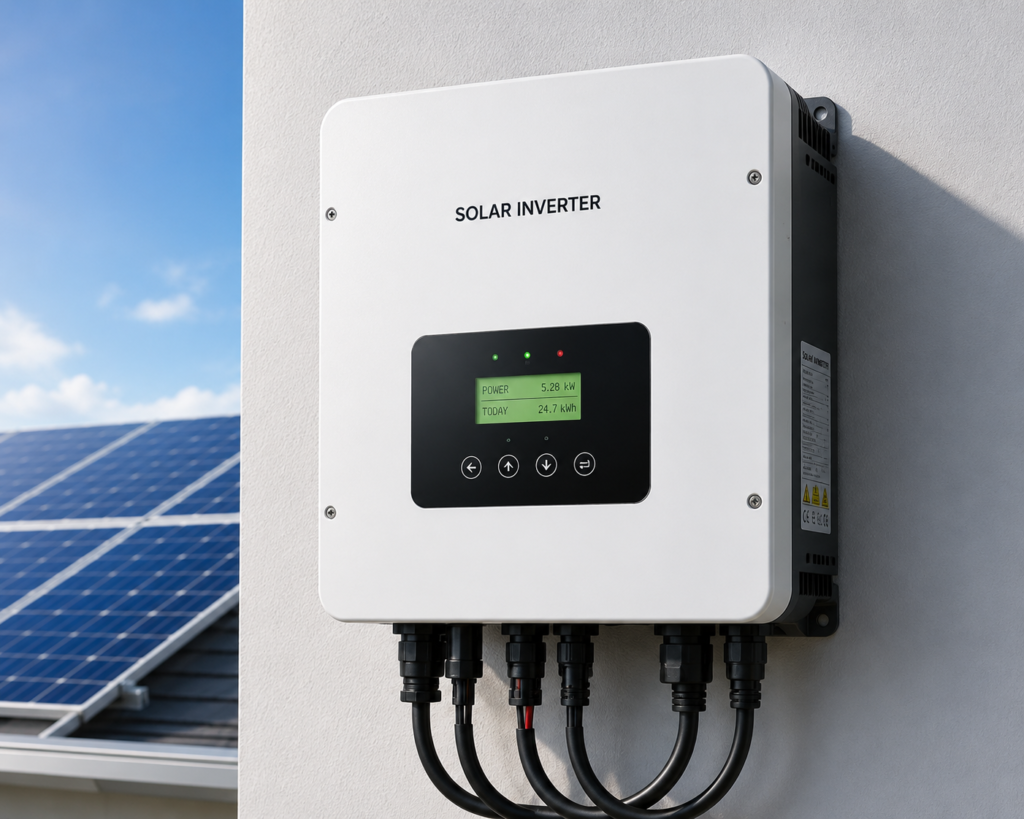
A solar inverter is an electronic device that converts the electricity generated by solar panels into electricity that can be used by your home or business. Solar panels generate electricity in the form of direct current (DC). However, most electrical appliances, lighting systems and equipment in Malaysian buildings operate using alternating current (AC).
The solar inverter acts as the bridge between the solar panels and your electrical system. The basic process looks like this:
Sunlight → Solar Panels → DC Electricity → Solar Inverter → AC Electricity → Home or Business
Without an inverter, the electricity generated by conventional solar panels cannot be directly used by most standard household or commercial appliances.
What Does a Solar Inverter Do?
The main function of a solar inverter is to convert DC electricity from your solar panels into usable AC electricity. However, modern solar inverters can do much more than electricity conversion.
1. Converts DC Electricity Into AC Electricity
When sunlight reaches your solar panels, photovoltaic cells inside the panels generate DC electricity. The inverter receives this DC electricity and converts it into AC electricity suitable for use within the building. Once converted, the solar-generated electricity can power equipment such as:
- Air conditioners
- Lighting
- Refrigerators
- Computers
- Televisions
- Office equipment
- Machinery and other electrical loads
This conversion happens automatically whenever the solar system is generating electricity.
2. Helps Manage the Solar System
Modern solar inverters also help manage how electricity moves through a solar installation. Depending on the system configuration, electricity generated by the solar panels may be:
Used immediately → stored in a battery → or managed according to the system's grid configuration.
The inverter helps coordinate this process so the system can operate efficiently.
3. Optimises Solar Energy Production
Sunlight conditions constantly change throughout the day. Cloud cover, temperature, shading and the position of the sun can all affect how much electricity solar panels generate. Many modern inverters use technology known as Maximum Power Point Tracking (MPPT).
MPPT continuously adjusts the operating conditions of the solar panels to help extract as much usable power as possible under changing environmental conditions. This can improve the overall performance of the solar system.
4. Monitors Solar System Performance
Many modern solar inverters include built-in monitoring features. Homeowners and businesses may be able to check their solar system through a mobile application or online dashboard. Depending on the inverter and system configuration, you may be able to monitor information such as:
- Current solar generation
- Daily energy production
- Monthly energy production
- Historical performance
- System status
- Error notifications
This makes it easier to understand how your solar system is performing. For businesses with larger installations, monitoring can also help facility managers identify unusual changes in solar generation.
5. Provides Important Safety Functions
Solar inverters also contain several safety and protection features. For example, grid-connected solar systems generally need to stop exporting or supplying electricity to the grid during certain grid outages. This helps protect technicians who may be working on electrical infrastructure.
Depending on the inverter, additional protection features may include voltage monitoring, frequency monitoring, temperature protection and fault detection. The exact safety features vary according to the inverter model and system design.
Types of Solar Inverters
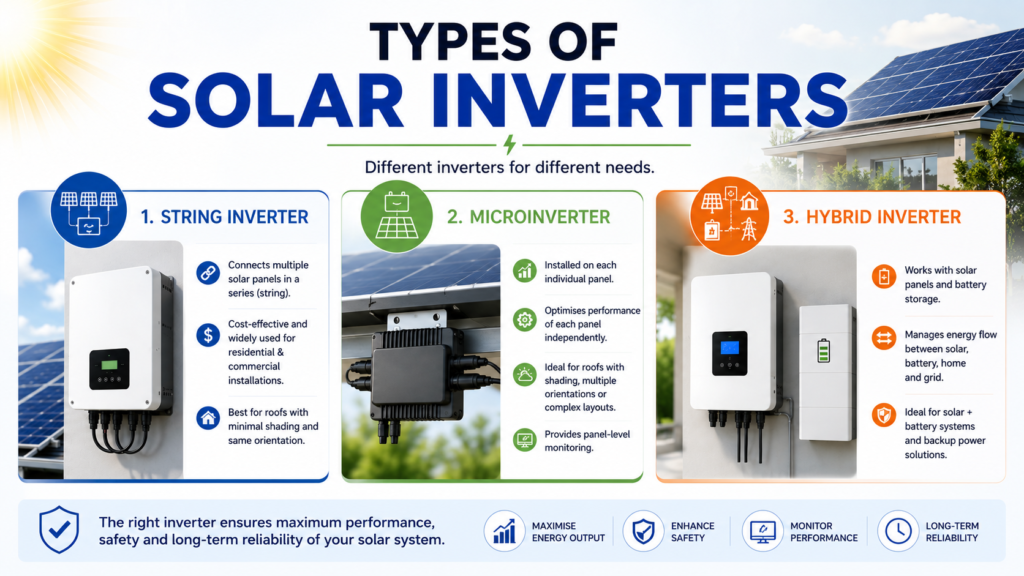
There are several types of solar inverter technologies. The appropriate option depends on the size, layout and requirements of the solar installation.
String Inverter
A string inverter connects multiple solar panels together in a series or "string." Electricity generated by these panels is sent to a central inverter. String inverters are commonly used because they offer a relatively simple system architecture and can be suitable for many residential and commercial installations. However, significant shading or different panel orientations may affect how individual strings perform.
Microinverter
A microinverter is installed at individual solar panels rather than having one central inverter for the entire array. Each panel's electricity is converted from DC to AC independently. This can be useful for roofs with:
- Partial shading
- Multiple orientations
- Complicated roof layouts
- Different panel performance conditions
Microinverter systems can also provide panel-level monitoring, although system cost and design considerations may differ from conventional string inverter installations.
Hybrid Inverter
A hybrid inverter is designed to work with solar panels and compatible battery storage systems. It can help manage electricity between the:
Solar panels ↔ Building ↔ Battery ↔ Grid
Hybrid inverters are particularly relevant for homeowners and businesses considering a solar + battery setup. However, battery compatibility and backup functionality depend on the specific inverter, battery and system configuration.
String Inverter vs Microinverter vs Hybrid Inverter
| Inverter Type | Typical Application | Main Advantage |
|---|---|---|
| String Inverter | Residential & commercial solar | Simple and widely used |
| Microinverter | Complex or partially shaded roofs | Individual panel optimisation |
| Hybrid Inverter | Solar + battery systems | Battery integration and energy management |
There is no single inverter type that is ideal for every property. A suitable inverter should be selected based on the property's electricity usage, roof layout, solar array size, shading conditions and future energy requirements.
What Happens to Solar Electricity After It Reaches the Inverter?
Imagine your solar panels are generating electricity on a sunny afternoon. The process typically works like this:
Step 1: Solar panels absorb sunlight.
Step 2: The panels generate DC electricity.
Step 3: DC electricity flows to the inverter.
Step 4: The inverter converts DC electricity into AC electricity.
Step 5: The AC electricity is supplied to the building's electrical system.
Step 6: Your appliances and equipment consume the available solar-generated electricity.
What happens to additional electricity depends on the solar system design, battery configuration and applicable grid arrangement.
Where Is a Solar Inverter Installed?
The ideal location depends on the property and the manufacturer's installation requirements.
Inverters are generally installed somewhere that is:
- Well ventilated
- Easily accessible for maintenance
- Protected from excessive heat where possible
- Suitable for the inverter's environmental rating
- Close enough to the relevant electrical equipment
Good inverter placement can contribute to reliable operation and easier maintenance.
How Long Does a Solar Inverter Last?
A solar inverter is an electronic component and its lifespan may differ from that of solar panels. Actual service life depends on factors including the inverter model, installation quality, operating temperature, environmental conditions, electrical loads and maintenance.
Because an inverter is a critical component of the system, its condition should be considered when planning the long-term maintenance and operating costs of a solar installation.
How Do You Choose the Right Solar Inverter?
Choosing an inverter involves more than simply selecting a brand. A solar provider should consider factors such as:
- Solar system capacity
- Number and configuration of panels
- Roof orientation
- Shading conditions
- Residential or commercial application
- Electrical load profile
- Grid requirements
- Battery requirements
- Monitoring preferences
- Manufacturer warranty and technical support
Correct sizing is particularly important. An inverter that is poorly matched to the solar array may affect system performance. A professional solar assessment can determine an appropriate inverter configuration for the property.
Solar Inverter and Battery Storage
If you are considering adding a battery, inverter compatibility becomes especially important. Some solar systems use hybrid inverters that can manage both solar generation and battery charging.
During periods of strong solar generation, electricity may be used to power the property while additional energy can potentially charge the battery, depending on the system configuration. Stored energy can then be used when solar production is lower or according to the battery's operating settings.
If battery storage is something you may want in the future, discuss this with your solar provider before choosing an inverter.
Frequently Asked Questions
What does a solar inverter do?
A solar inverter converts DC electricity generated by solar panels into AC electricity that can be used by most homes and businesses. Modern inverters can also provide system monitoring, power optimisation and various protection functions.
Can solar panels work without an inverter?
Solar panels can generate DC electricity without an inverter, but conventional homes and businesses generally require AC electricity. An inverter is therefore a core component of most grid-connected solar installations.
Is an inverter the same as a solar panel?
No. Solar panels capture sunlight and generate DC electricity, while the inverter converts that DC electricity into usable AC electricity.
Does every solar system need an inverter?
Most conventional residential and commercial solar PV systems require inverter technology. The exact inverter configuration depends on the design and application of the system.
What is a hybrid solar inverter?
A hybrid inverter is designed to manage solar generation while supporting compatible battery storage. It can coordinate electricity flows between solar panels, the property, battery storage and the grid according to the system configuration.
How do I know if my solar inverter is working?
Many modern inverters have status indicators and digital monitoring platforms. If generation suddenly falls significantly or the inverter displays an error, the system should be checked by a qualified solar professional.
Related posts
- Solar for Schools & Universities Malaysia
Have Questions About Solar for Your Property? Talk to our team to find the right solar solution for...
- Solar for Factory Malaysia
Have Questions About Solar for Your Property? Talk to our team to find the right solar solution for...
- Cara Kurangkan Bil Elektrik Rumah
Ada Soalan Tentang Solar untuk Anda? Berbincang dengan pakar kami untuk dapatkan cadangan sistem solar yang sesuai dengan...