Have Questions About Solar for Your Property?
Talk to our team to find the right solar solution for your specific needs and budget.
Introduction
Malaysia's manufacturing industry is one of the country's largest electricity consumers. Factories across many sectors need a reliable and cost-effective power supply to keep production running. These sectors include:
- Electronics
- Food processing
- Automotive
- Plastics
- Textiles
- Metal fabrication
Electricity tariffs are rising, and international customers are demanding more sustainability. Because of this, more manufacturers are turning to solar energy as a long-term solution. A commercial solar PV system lets manufacturing plants cut operating costs significantly. It also supports Environmental, Social and Governance (ESG) goals.
In this article, we'll explore how solar power benefits manufacturing facilities in Malaysia and why now is an ideal time to invest.
Solar for Manufacturing Plants Malaysia: Reduce Energy Costs & Improve Operational Efficiency
Update: NEM Has Ended, Solar ATAP Takes Over
2026 update: The NEM (Net Energy Metering) scheme officially ended on 30 June 2025 and is no longer accepting new registrations. The current replacement programme is Solar ATAP (Solar Accelerated Transition Action Programme), effective from 1 January 2026, with cash rebates up to RM3,000 through SuRIA Home. Read the full Solar ATAP guide here →
Why Manufacturing Plants Use So Much Electricity
Manufacturing facilities typically operate multiple high-energy systems simultaneously, including:
- Heavy production machinery
- Air compressors
- HVAC systems
- Industrial lighting
- Conveyor systems
- Cooling equipment
- Boilers and pumps
- Packaging machines
- Quality control equipment
Many factories also operate 12 to 24 hours daily, making electricity one of their largest recurring operational expenses.
Even small reductions in electricity bills can generate significant annual savings.
Benefits of Solar for Manufacturing Plants
1. Reduce Electricity Bills
Solar panels generate electricity during daylight hours when factories often experience their highest electricity demand.
Instead of purchasing all electricity from the grid, your factory uses the electricity produced by the solar PV system first.
Benefits include:
Lower monthly electricity bills
Reduced dependency on grid electricity
Protection against future tariff increases
Improved cash flow
Many manufacturers can reduce their electricity costs by 20–60%, depending on system size and energy consumption patterns.
2. Lower Operating Costs
Electricity is a significant component of manufacturing overhead.
By reducing energy expenses, companies can:
Increase profit margins
Improve production competitiveness
Allocate savings toward expansion
Offset rising labour and material costs
Solar transforms a variable utility expense into a predictable long-term investment.
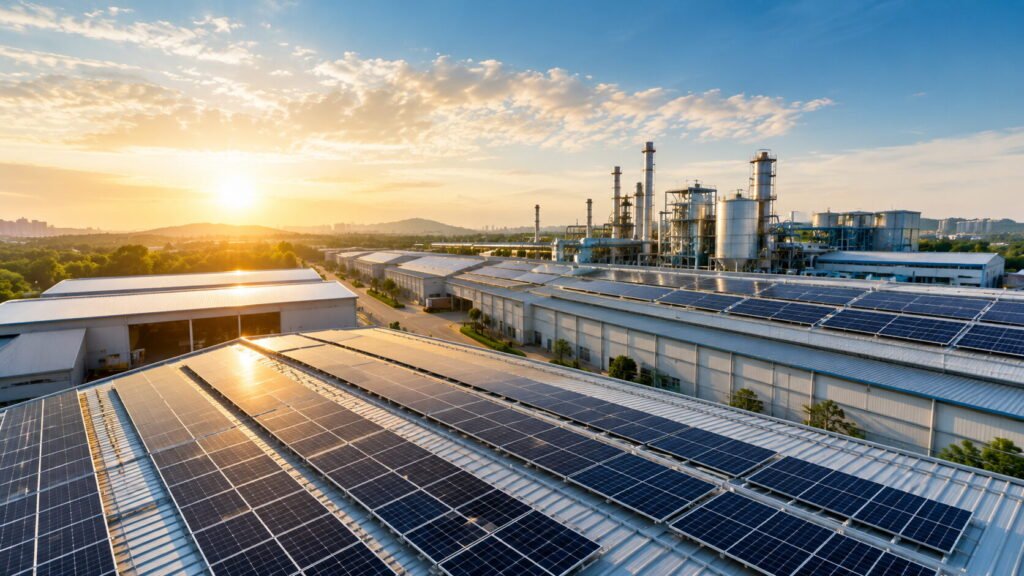
3. Excellent Roof Space Utilisation
Manufacturing facilities usually have:
Large warehouse roofs
Production halls
Storage buildings
Distribution centres
These expansive rooftops are ideal for installing commercial solar PV systems without affecting daily operations.
Unused roof space becomes an asset that generates clean electricity every day.
4. Support ESG and Sustainability Goals
Many global customers now require suppliers to demonstrate sustainable manufacturing practices.
Installing solar helps companies:
Reduce carbon emissions
Improve ESG performance
Meet sustainability reporting requirements
Enhance corporate reputation
Strengthen relationships with environmentally conscious clients
Solar can also contribute toward achieving corporate net-zero targets.
5. Stable Long-Term Energy Costs
Electricity tariffs may increase over time due to fuel prices and infrastructure costs.
Solar allows manufacturers to generate part of their own electricity, reducing exposure to future tariff fluctuations.
This improves budgeting and long-term financial planning.
Ideal Manufacturing Industries for Solar
Solar energy is suitable for many industries, including:
- Electronics manufacturing
- Food and beverage processing
- Automotive manufacturing
- Pharmaceutical factories
- Plastic production
- Textile factories
- Chemical processing
- Furniture manufacturing
- Printing companies
- Metal fabrication
- Packaging manufacturers
- Logistics and distribution centres
Any facility with significant daytime electricity usage can benefit from solar.
How Solar Works in a Factory
During daylight hours:
- Solar panels generate electricity.
- The factory uses solar power first.
- Any additional electricity required is supplied by the grid.
- If excess energy is generated (subject to applicable schemes and approvals), it may be exported to the grid where permitted.
The process is fully automatic and requires minimal user intervention.
Battery Storage for Manufacturing
Some manufacturers choose to combine solar panels with battery energy storage systems.
Benefits include:
- Backup power during outages
- Reduced production downtime
- Peak demand management
- Better utilisation of solar energy
- Improved energy resilience
Battery systems are especially valuable for facilities with critical production lines or sensitive equipment.
Want to know how much you can save?
Send us your TNB bill and we will work out the system size and cost. Free, no commitment.
Return on Investment
Commercial solar systems typically provide:
- Significant monthly electricity savings
- Low maintenance requirements
- Long operational lifespan (25 years or more)
- Attractive long-term return on investment
The exact payback period depends on factors such as:
- Factory electricity usage
- Available roof area
- System capacity
- Installation costs
- Applicable financing options and incentives
Maintenance Requirements
Solar PV systems require relatively little maintenance.
Routine maintenance includes:
- Cleaning panels
- Electrical inspections
- Performance monitoring
- Inverter servicing when required
Professional maintenance ensures the system continues operating efficiently throughout its lifespan.
Government Support for Commercial Solar
Malaysia continues to encourage renewable energy adoption through various programmes and regulatory frameworks.
Depending on your project and eligibility, businesses may benefit from:
- Commercial solar financing options
- Net Energy Metering (where applicable)
- Green investment initiatives
- Tax-related incentives available under current government policies
Working with an experienced solar provider helps ensure compliance with the latest requirements and available opportunities.
Why Choose Arus Energy?
Arus Energy provides complete commercial solar solutions tailored to the needs of Malaysian manufacturing facilities.
Our services include:
- Detailed energy assessment
- Custom solar system design
- Professional installation
- High-performance solar technology
- System monitoring
- Preventive maintenance
- Ongoing technical support
Whether you operate a small factory or a large industrial plant, we help you reduce energy costs while improving sustainability and operational efficiency.
Frequently Asked Questions
Q: Why do manufacturing plants in Malaysia consume so much electricity?
\nA: Factories typically run multiple high-energy systems simultaneously, such as production machinery, air compressors, HVAC systems, industrial lighting, conveyors, cooling equipment, boilers, and packaging machines, with many operating 12 to 24 hours a day.
\nQ: Has the Net Energy Metering (NEM) scheme been replaced?
\nA: Yes, NEM officially ended on 30 June 2025 and is no longer accepting new registrations; it has been replaced by the Solar ATAP (Solar Accelerated Transition Action Programme), effective from 1 January 2026.
\nQ: How does solar reduce electricity costs for manufacturing plants?
\nA: Solar panels generate electricity during daylight hours, which is often when factories experience their highest electricity demand, allowing plants to offset grid purchases during peak usage periods.
\nQ: Why are manufacturers increasingly turning to solar power?
\nA: Rising electricity tariffs and growing sustainability requirements from international customers are pushing more manufacturers to adopt solar as a long-term way to reduce operating costs and support ESG initiatives.
\nQ: Can even small electricity bill reductions matter for a factory?
\nA: Yes, because factories often operate continuously for long hours, even small reductions in electricity costs can add up to significant annual savings.
Conclusion
Solar energy is becoming an increasingly valuable investment for manufacturing plants in Malaysia. It helps manufacturers stay competitive by:
- Lowering electricity costs
- Improving operational efficiency
- Making productive use of large rooftop areas
- Supporting sustainability objectives
This applies whether you run an electronics factory, food processing plant, automotive facility, or industrial warehouse. A professionally designed solar PV system can deliver long-term savings and greater energy security. Partnering with an experienced provider such as Arus Energy ensures a solution tailored to your operational requirements and future growth.
Professional services
Our expertise
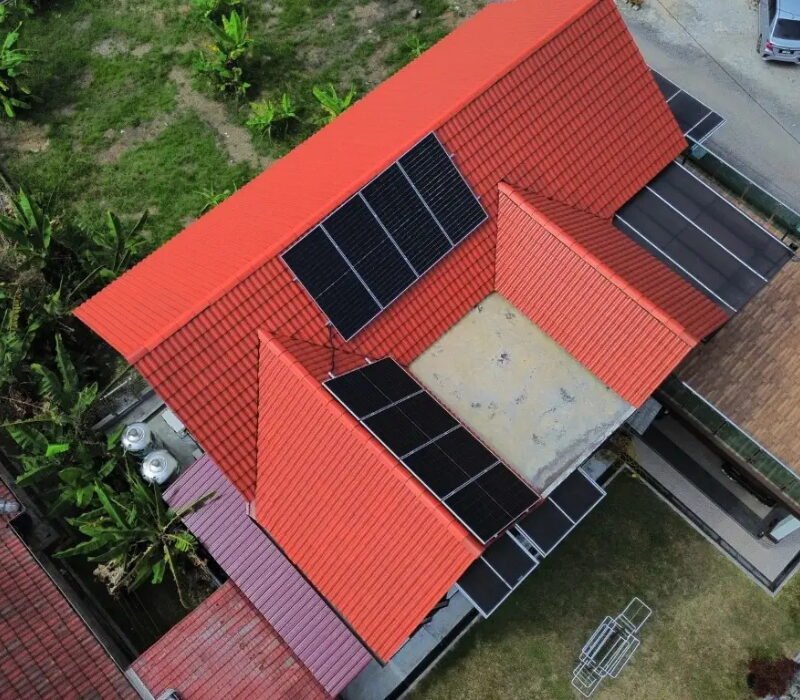
Instead of paying recurring electricity charges, invest in a system that generates its own power and reduces your long-term household expenses.
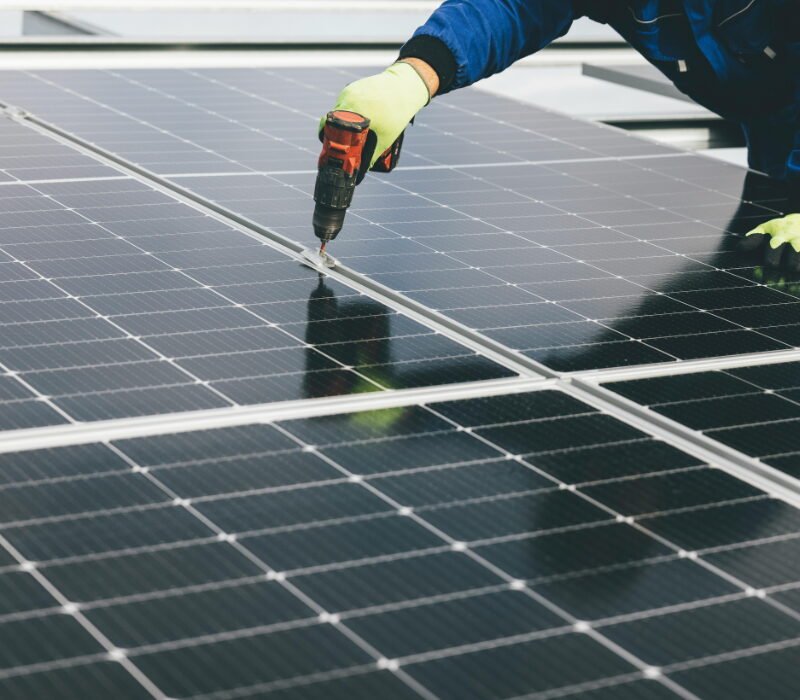
Solar panels are built to last. With minimal maintenance and strong performance warranties, a solar system continues generating savings year after year.



Ready to start?
Talk to the Arus EnerG team first. We can survey your roof and give you real numbers before you decide.
Related posts
- Berapa Lama Solar Panel Boleh Tahan?
Ada Soalan Tentang Solar untuk Anda? Berbincang dengan pakar kami untuk dapatkan cadangan sistem solar yang sesuai dengan...
- Solar Panel Maintenance Guide Malaysia
Have Questions About Solar for Your Property? Talk to our team to find the right solar solution for...
- TNB Bill Calculator Malaysia 2026: Free Tool + Step-by-Step Formula
Quick answer: To calculate your TNB bill: (1) take your kWh reading, (2) multiply by the RP4 tariff...
13 August 202601LikeBy Arus EnerG