Contents
- Key Takeaways: Solar for bungalow houses
- Introduction
- Why Are Bungalow Houses Suitable for Solar?
- What System Size Is Suitable?
- How Much Can You Save?
- Do You Need a Solar Battery?
- Factors to Consider
- Solar Installation Process
- How Long Do Solar Panels Last?
- Solar System Maintenance
- Does Solar Increase Property Value?
- Frequently Asked Questions (FAQ): Solar for bungalow houses
- Conclusion
Want an answer specific to your case?
This guide covers the general picture. For numbers and advice matched to your roof and your bill, talk to the Arus EnerG team.
Key Takeaways: Solar for bungalow houses
Panduan ini menerangkan solar for bungalow houses untuk pemilik rumah dan perniagaan di Malaysia, berdasarkan terma dan angka semasa.
- Bungalows usually have three-phase supply, which raises the Solar ATAP cap to 15 kW.
- Larger roofs mean roof area is rarely the limiting factor — consumption usually is.
- Pool pumps, water heaters, and multiple aircon units create schedulable daytime load.
- The SuRIA Home rebate still caps at RM3,000 (5 kWac) even on a 15 kW system.
- Larger arrays make shading analysis and string design more consequential, not less.
Everything below expands on solar for bungalow houses in more detail.
Introduction
Interest in solar systems for bungalow houses in Malaysia is growing among homeowners looking to reduce their electricity bills and increase their property value. With larger roof areas compared to terrace houses or apartments, bungalow houses offer ideal space for installing higher-capacity solar panel systems.
This article explains the benefits, costs, installation process, and factors to consider before installing a solar system for a bungalow house in Malaysia.
- Why Are Bungalow Houses Suitable for Solar?
- What System Size Is Suitable?
- Do You Need a Solar Battery?
- Factors to Consider
- Solar Installation Process
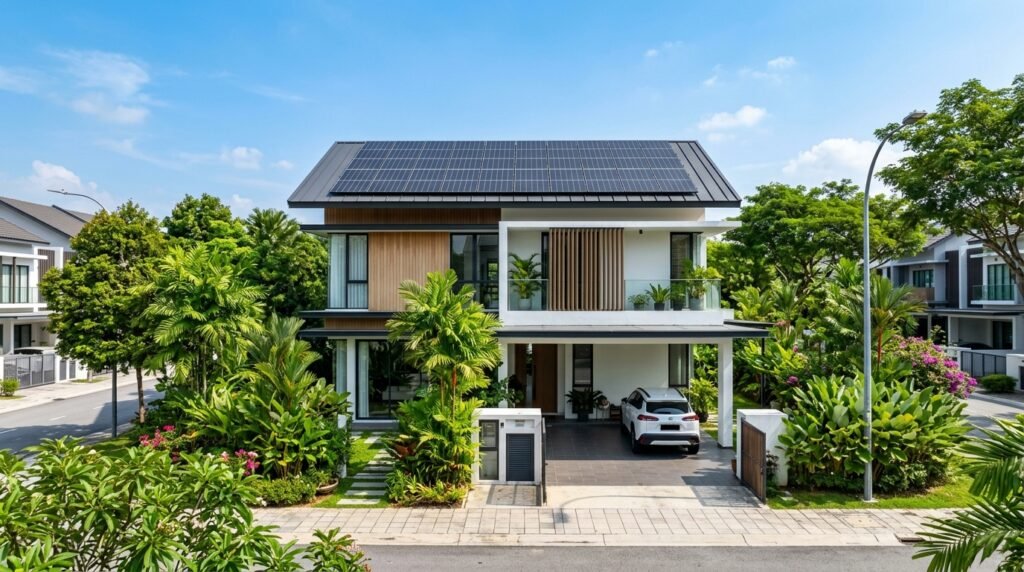
Why Are Bungalow Houses Suitable for Solar?
Bungalow houses have several advantages that make them an excellent location for solar panel installation.
1. Larger Roof Space
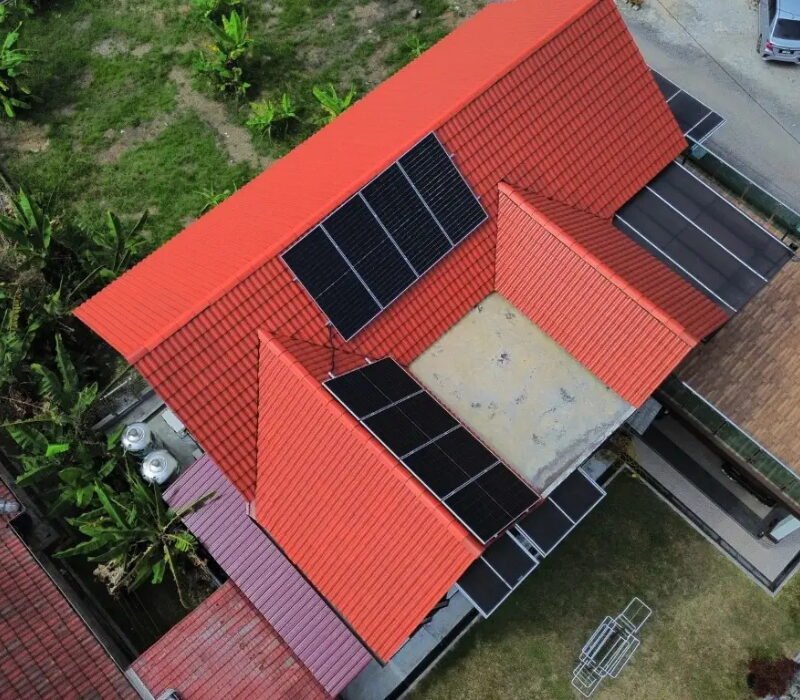
Bungalow houses typically have enough roof area to accommodate more solar panels.
More panels mean:
Higher energy generation
Greater electricity bill savings
System capacity can be scaled up according to your needs
2. Higher Electricity Usage
Most bungalow houses use more electricity due to:
Multiple air conditioning units
Water heaters
Electric kitchens
Swimming pools
Water pumps
EV (Electric Vehicle) chargers
Home automation systems
The higher the electricity usage, the faster the return on investment (ROI) for a solar system.
3. Fewer Obstructions to Sunlight
Bungalow houses are usually not blocked by tall buildings around them.
This allows the panels to receive optimal sunlight throughout the day and generate more energy.
A bungalow usually has schedulable loads a terrace house does not — pool pump, water heating, irrigation. Shift them to the middle of the day and you consume your own solar at full retail value instead of exporting it at a lower one. This is the cheapest way to improve returns on a large residential system, and it costs nothing to implement.
What System Size Is Suitable?
Solar system size depends on your monthly electricity usage.
| Monthly Electricity Bill | Recommended Solar System |
|---|---|
| RM300 – RM500 | 4 – 6 kWp |
| RM500 – RM800 | 6 – 8 kWp |
| RM800 – RM1,500 | 8 – 12 kWp |
| RM1,500 and above | 12 – 20 kWp or more |
Bungalow homeowners typically choose a system between 8 kWp to 15 kWp depending on their energy needs.
How Much Can You Save?
A solar system can generate energy throughout daylight hours.
If your electricity usage occurs during the day, most of that energy can be used directly without buying electricity from the grid.
On average, homeowners can enjoy:
- Electricity bill savings of up to 70%
- Lower household operating costs
- Protection against future electricity tariff increases
The actual amount of savings depends on:
- System size
- Roof orientation
- Electricity usage patterns
- Weather conditions
Do You Need a Solar Battery?
A solar battery is not compulsory.
There are two main options:
Grid-Tied System
This is the most popular system in Malaysia.
Its advantages:
- Lower installation cost
- Best savings
- Minimal maintenance
- Suitable for most bungalow houses
System With Battery
A battery stores solar energy for use at night or when the electricity supply is cut off.
Suitable for homeowners who want:
- A backup power supply
- Reduced dependence on the grid
- Support for home automation systems
However, using a battery increases the overall installation cost.
Factors to Consider
Before installing a solar system, several factors need to be assessed.
Roof Condition
Make sure:
- The roof structure is still sound
- There are no leaks
- It can support the installation of solar panels
Roof Orientation
Panels facing the optimal direction with good sun exposure will generate more energy.
Shading
Avoid areas shaded by:
- Large trees
- Tall buildings
- Chimneys
- Water tanks
Electricity Usage
Analysing 12 months of electricity bills helps determine the most suitable system size.
Solar Installation Process
Installation usually goes through several stages:
- Site inspection.
- Electricity usage analysis.
- Solar system design.
- Quotation.
- Relevant applications, if required.
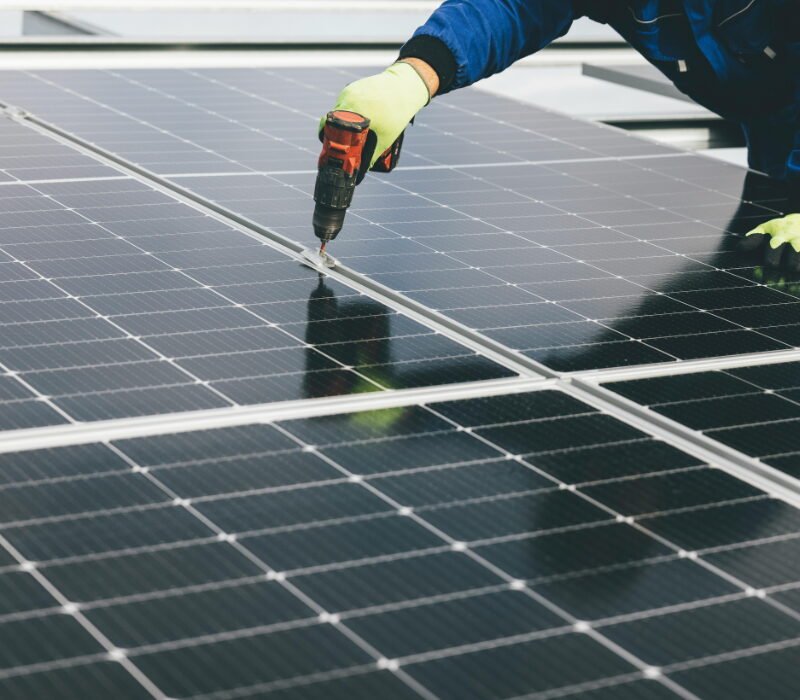
- Solar panel installation.
- System testing and inspection.
- System commissioning.
The entire process usually takes a few weeks, depending on the scope of the project.
How Long Do Solar Panels Last?
Modern solar panels are designed for long-term use.
Generally:
- Panel lifespan exceeds 25 years.
- Inverters typically last around 10 to 15 years.
- Mounting structures are made from corrosion-resistant materials suited to Malaysia’s climate.
With regular maintenance, the system can operate efficiently for a long time.
Solar System Maintenance
Solar systems require minimal maintenance.
This includes:
- Cleaning the panels if dust or leaves accumulate.
- Periodic checks of the electrical connections.
- Monitoring system performance through a monitoring app.
- Professional inspections according to the recommended schedule.
Does Solar Increase Property Value?
Yes. Homes fitted with a solar system are often seen as more attractive because they offer lower utility costs and a more modern, eco-friendly feature.
In addition, the use of renewable energy is also a value-add for buyers who prioritise energy efficiency.
Three-phase supply lets you install up to 15 kW under Solar ATAP, but the SuRIA Home rebate still stops at RM3,000, which is reached at 5 kWac. The extra 10 kW earns its return through energy savings alone — worth knowing before the rebate is presented as scaling with size.
In short, solar for bungalow houses works best when the system is sized against real consumption and installed by a registered contractor.
Untuk solar for bungalow houses, Arus EnerG tawarkan penilaian tapak dan konsultasi percuma tanpa sebarang obligasi.
Want to know how much you can save?
Send us your TNB bill and we will work out the system size and cost. Free, no commitment.
Frequently Asked Questions (FAQ): Solar for bungalow houses
Soalan yang paling kerap ditanya tentang solar for bungalow houses:
Q: Why are bungalow houses suitable for solar installation?
A: Bungalow houses typically have spacious roof areas, high electricity usage, and fewer obstructions from surrounding buildings, making them a suitable location for a higher-capacity solar system.
Q: What size solar system is suitable for a bungalow house?
A: System size depends on your monthly electricity bill; as a guide, a bill of RM800-RM1,500 suits an 8-12 kWp system, while most bungalow owners choose between 8 kWp and 15 kWp.
Q: What factors contribute to high electricity usage in bungalow houses?
A: Factors such as air conditioning, water heaters, electric kitchens, swimming pools, water pumps, EV chargers, and home automation systems typically contribute to higher electricity usage compared with terrace houses or apartments.
Q: Does high electricity usage affect the return on investment of a solar system?
A: On the contrary, the higher a bungalow house’s electricity usage, the faster the return on investment (ROI) of a solar system, because more of the solar energy generated can be used directly.
Q: Why does a bungalow house’s position help solar panel performance?
A: Bungalow houses are usually not blocked by tall buildings nearby, so the solar panels can receive optimal sunlight throughout the day and generate more energy.
Conclusion
Bungalow houses in Malaysia are among the types of residential property best suited for solar installation because they have spacious roofs and high electricity usage. With proper planning, a solar system can significantly reduce electricity bills, deliver a good return on investment, and increase property value over the long term.
For the best performance, homeowners are encouraged to get a site assessment and system recommendation from an experienced solar provider so that the system size, design, and installation are tailored to the property’s actual needs.
Professional services
Our expertise
Residential Solar
Instead of paying recurring electricity charges, invest in a system that generates its own power and reduces your long-term household expenses.
Commercial Solar
Solar panels are built to last. With minimal maintenance and strong performance warranties, a solar system continues generating savings year after year.
Registered, certified and recognised by






Related Articles about solar for bungalow houses
- Why Is My TNB Bill So High?
- Solar for Homes in Malaysia: The Complete Guide
- How to Reduce Your Home Electricity Bill
Ready to start?
Talk to the Arus EnerG team first. We can survey your roof and give you real numbers before you decide.
- Panduan Bateri Solar Malaysia: Jenis, Kos & Kuasa Sandaran
Panduan bateri solar Malaysia ialah antara soalan paling kerap ditanya oleh pemilik rumah dan perniagaan di Malaysia sebelum...
- Why Businesses Are Moving to Solar Energy
Have Questions About Solar for Your Property? Talk to our team to find the right solar solution for...
- TNB Bill Calculator Malaysia 2026: Free Tool + Step-by-Step Formula
Quick answer: To calculate your TNB bill: (1) take your kWh reading, (2) multiply by the RP4 tariff...