Contents
- Introduction
- Best Houses for Solar Installation in Malaysia
- What Makes a House Suitable for Solar Panels?
- 1. Detached Houses
- 2. Semi-Detached Houses
- 3. Terrace Houses
- 4. Bungalows
- 5. Houses With Large, Simple Roof Designs
- 6. Houses With Minimal Shading
- Which Houses May Be Less Suitable for Solar?
- Quick Checklist: Is Your House Good for Solar?
- Frequently Asked Questions (FAQ)
Choose Safe, Reliable Solar with Arus EnerG
Contact Arus EnerG today for a free consultation and discover how safe, efficient solar energy can power your property for decades.
Introduction
Solar panels are becoming an increasingly attractive option for Malaysian homeowners who want to reduce their dependence on grid electricity and make better use of renewable energy.
However, not every house has the same solar potential. Factors such as roof size, roof condition, shading and household electricity consumption can significantly affect how suitable a property is for solar installation.
What Makes a House Suitable for Solar Panels?
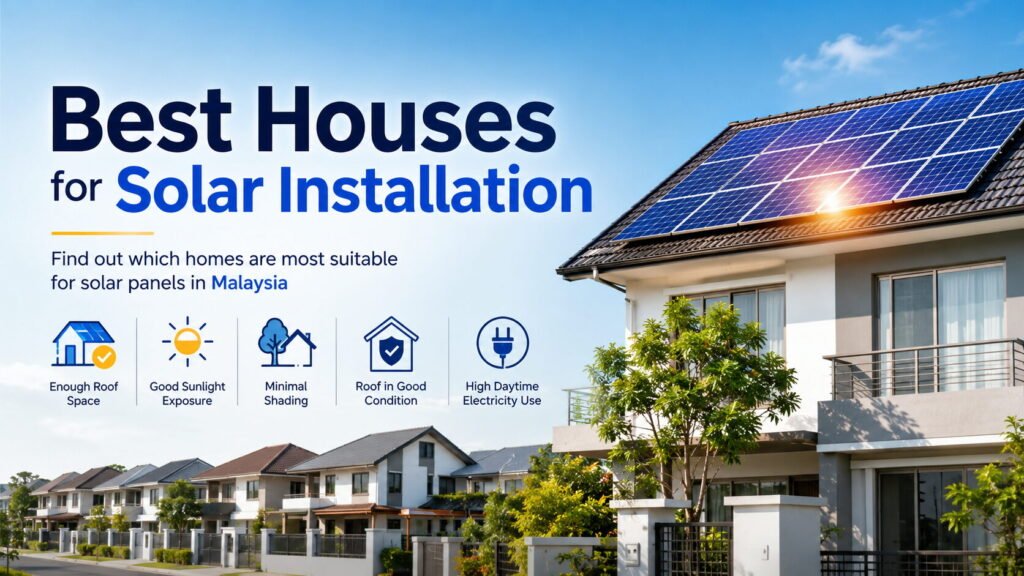
A good house for solar installation generally has three important characteristics: sufficient usable roof space, good sunlight exposure and a roof that is structurally suitable for mounting solar panels.
Electricity consumption is another important consideration. Solar PV generates electricity during daylight hours, so households that use more electricity during the day may be able to consume more of their solar generation directly.
In Peninsular Malaysia, homeowners should also consider the requirements of the current Solar Accelerated Transition Action Programme (Solar ATAP). Introduced from 1 January 2026, Solar ATAP allows consumers to install solar PV systems for self-consumption while exporting surplus electricity to the grid under the programme's applicable mechanism.
1. Detached Houses
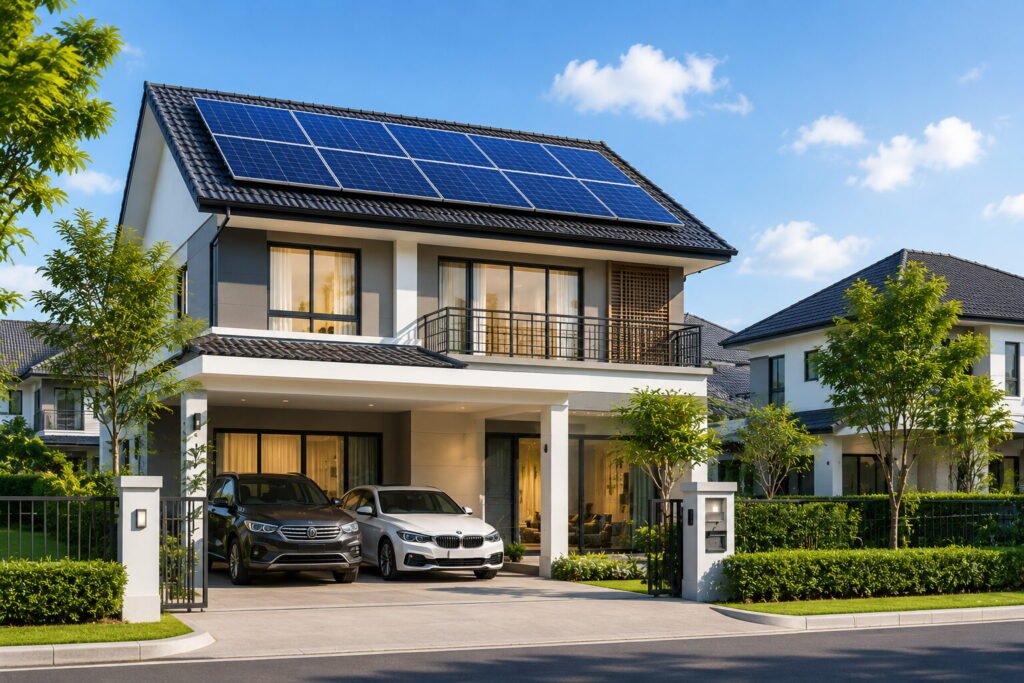
Detached houses are often among the best houses for solar installation because they typically offer larger roof areas.
More usable roof space can provide greater flexibility when designing the solar PV system. Installers may also have more options when selecting panel positions to minimise shading and maximise solar exposure.
Detached houses may be particularly suitable when they have:
- Large, unobstructed roof areas
- Minimal shading from neighbouring buildings
- Good daytime sunlight exposure
- Higher household electricity consumption
- Roof structures in good condition
For larger homes with air conditioning, water heaters, home offices, swimming pool equipment or other electrical appliances, solar can help offset part of the home's daytime electricity consumption.
2. Semi-Detached Houses
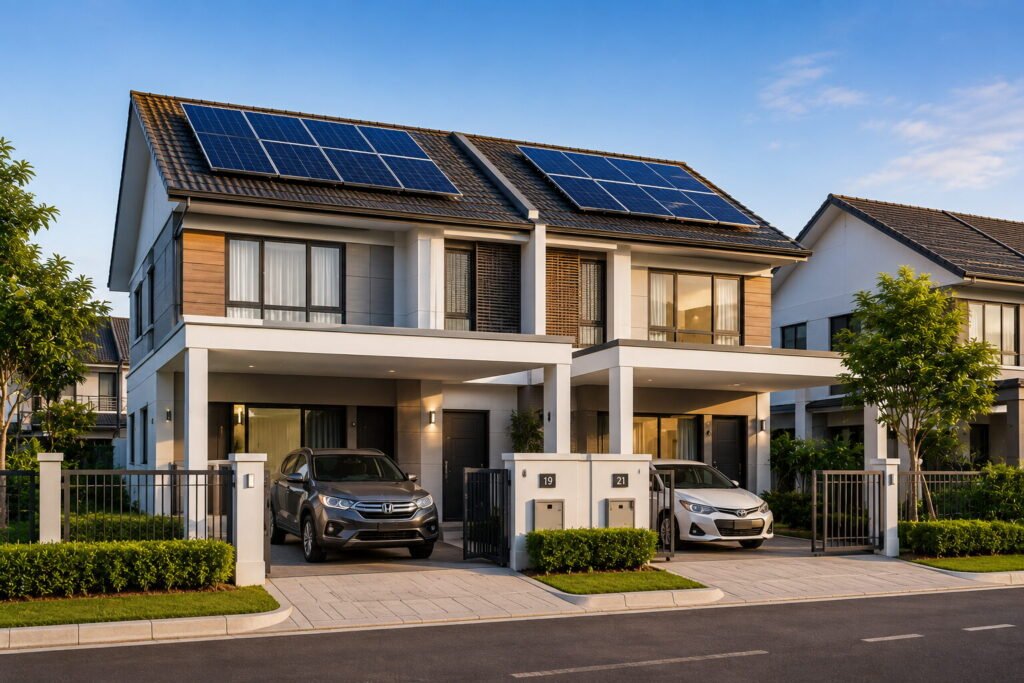
Semi-detached homes are another strong candidate for residential solar.
Although their roofs may be smaller than detached properties, many semi-D houses still provide enough usable roof area for a practical residential solar PV system.
The key is determining how much of the roof can actually be used. Chimneys, water tanks, roof extensions, satellite dishes and shading can reduce the available installation area.
A professional site assessment can determine the most practical panel arrangement.
3. Terrace Houses
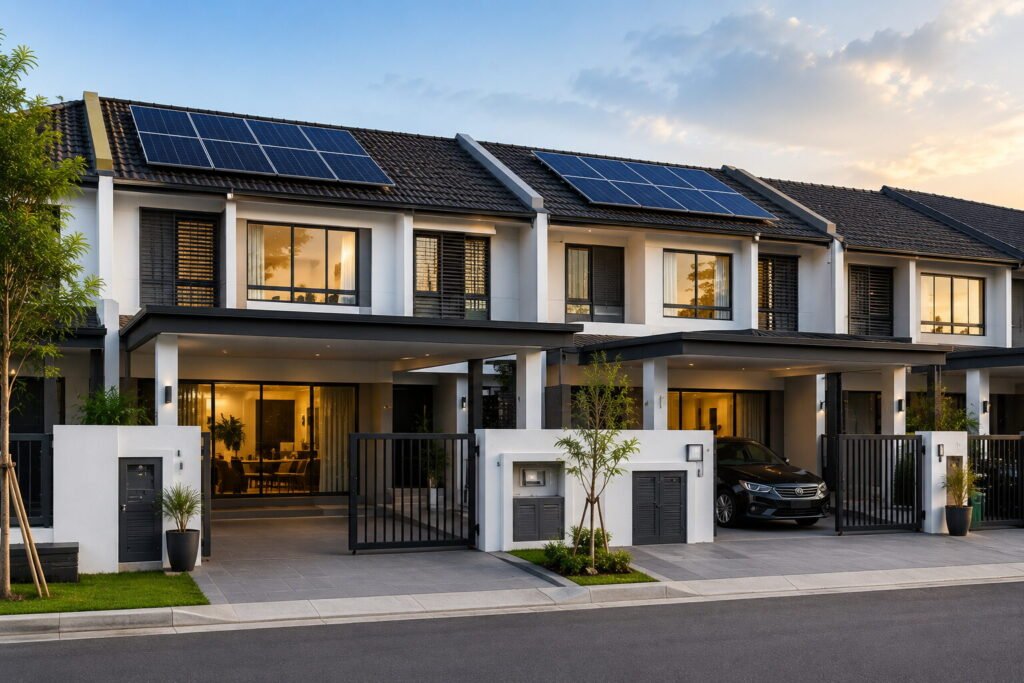
Can you install solar panels on a terrace house?
Yes.
Terrace houses can be suitable for solar installation when sufficient rooftop space and sunlight are available.
In Malaysia, many terrace houses have relatively straightforward roof layouts that can accommodate rooftop solar panels. However, neighbouring properties, trees and roof extensions can sometimes create shading.
Corner terrace houses may have additional roof or property space, although the actual solar potential still depends on the individual property.
Homeowners should therefore avoid assuming that a larger property automatically means better solar performance. The usable, unshaded roof area matters more.
Want to know how much you can save?
Send us your TNB bill and we will work out the system size and cost. Free, no commitment.
4. Bungalows
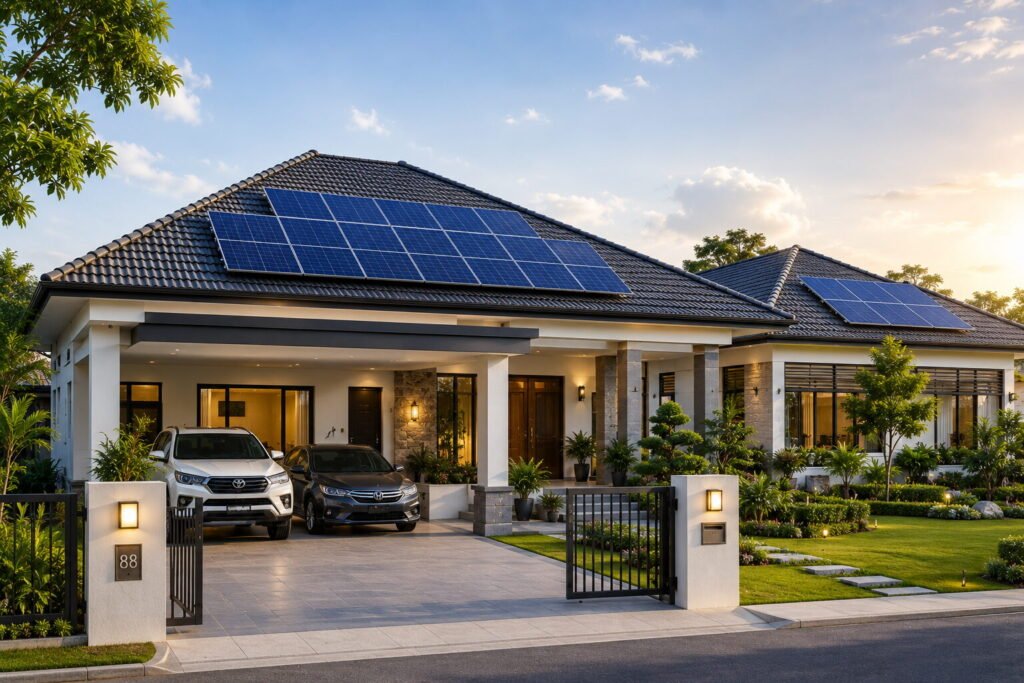
Bungalows are typically excellent candidates for residential solar PV.
Their larger roof areas can provide considerable flexibility for panel placement and system design. Bungalows also tend to have higher electricity consumption because of larger living spaces and additional electrical loads.
A bungalow with several air conditioners, electric water heaters, kitchen appliances and other high-consumption equipment may have significant daytime electricity demand.
Matching the solar system size to the property's actual electricity consumption is important rather than simply installing as many panels as the roof can accommodate.
5. Houses With Large, Simple Roof Designs
Regardless of whether the property is a terrace house, semi-D or bungalow, simple roof geometry can make solar installation easier.
Large roof sections with fewer obstructions generally provide installers with more flexibility.
Roofs with many different levels, decorative structures, skylights, water tanks or complicated angles can still support solar panels, but the system design may require additional planning.
The ideal roof provides enough continuous space for panels while allowing safe installation and maintenance access.
6. Houses With Minimal Shading
One of the most important characteristics of a solar-friendly home is good sunlight exposure.
Solar panels need sunlight to generate electricity efficiently. Significant shading from nearby objects can reduce the amount of solar energy generated.
Common sources of shading include:
- Large trees
- Taller neighbouring houses
- High-rise buildings
- Water tanks
- Roof structures
- Telecommunications equipment
Shading conditions should therefore be assessed before deciding where panels will be installed.
Which Houses May Be Less Suitable for Solar?
Solar installation may be less straightforward for homes with very limited roof space, heavy shading throughout the day or roofs requiring major repairs.
This does not necessarily mean solar cannot be installed.
A qualified solar provider can conduct a site assessment and determine whether there is enough usable roof area for a practical system.
For some properties, changing the panel layout, using different roof sections or carrying out roof improvements may make installation possible.
Quick Checklist: Is Your House Good for Solar?
Your home could be a strong candidate for solar if you have:
✓ Sufficient usable roof space
✓ Good sunlight exposure
✓ Minimal shading
✓ A roof in good condition
✓ Regular daytime electricity consumption
✓ Suitable electrical infrastructure
✓ Space for safe installation and maintenance
Even if your home does not meet every point above, it may still be suitable. A professional site assessment provides a more accurate answer.
Frequently Asked Questions (FAQ)
1. What type of house is best for solar installation?
Detached houses, semi-detached houses, terrace houses and bungalows can all be suitable for solar. The most important factors are sufficient roof space, good sunlight exposure, minimal shading and a roof in good condition.
2. Can terrace houses install solar panels in Malaysia?
Yes. Many terrace houses in Malaysia can install solar panels as long as there is enough usable roof space and the roof receives sufficient sunlight throughout the day.
3. How much roof space do I need for solar panels?
The required roof space depends on the number and size of solar panels needed. A solar provider can assess your roof and electricity consumption to determine an appropriate system size.
4. Can I install solar if my roof is shaded?
Partial shading does not necessarily prevent solar installation, but heavy shading can reduce energy generation. A site assessment can identify the best panel positions and determine whether solar is practical for your home.
5. Does the direction of my roof matter for solar panels?
Yes, roof orientation can affect solar generation, but it is only one factor. Roof angle, shading, available space and local sunlight conditions should also be considered when designing the system.
6. Can an old house install solar panels?
Yes, provided the roof and structure are in suitable condition. Older roofs may need to be inspected, repaired or replaced before solar panels are installed.
7. Is a bigger house always better for solar?
Not necessarily. A smaller house with an open, unshaded roof may have better solar potential than a larger house surrounded by trees or buildings.
8. How do I know if my house is suitable for solar?
The best way is to arrange a professional solar assessment. Arus EnerG can evaluate your roof space, shading, electricity consumption and property conditions to recommend a suitable residential solar system.
Ready to start?
Talk to the Arus EnerG team first. We can survey your roof and give you real numbers before you decide.
Related posts
- Pemasangan Panel Solar Setia Alam, Shah Alam: Panduan Kos & Penjimatan (2026)
Panduan ini menerangkan pemasangan solar Setia Alam untuk pemilik rumah dan perniagaan di Malaysia, berdasarkan terma dan angka...
14 August 20260LikeBy Arus EnerG - Solar Untuk Rumah Kedai & Perniagaan Runcit Malaysia
Nak jawapan khusus untuk kes anda?Artikel ni cover asasnya. Untuk angka dan cadangan yang tepat ikut bumbung dan...
14 August 20260LikeBy Arus EnerG - Senarai Semak Kualiti Pemasangan Solar
Nak jawapan khusus untuk kes anda?Artikel ni cover asasnya. Untuk angka dan cadangan yang tepat ikut bumbung dan...
14 August 20260LikeBy Arus EnerG